Mortar and Grotto Rock Parks
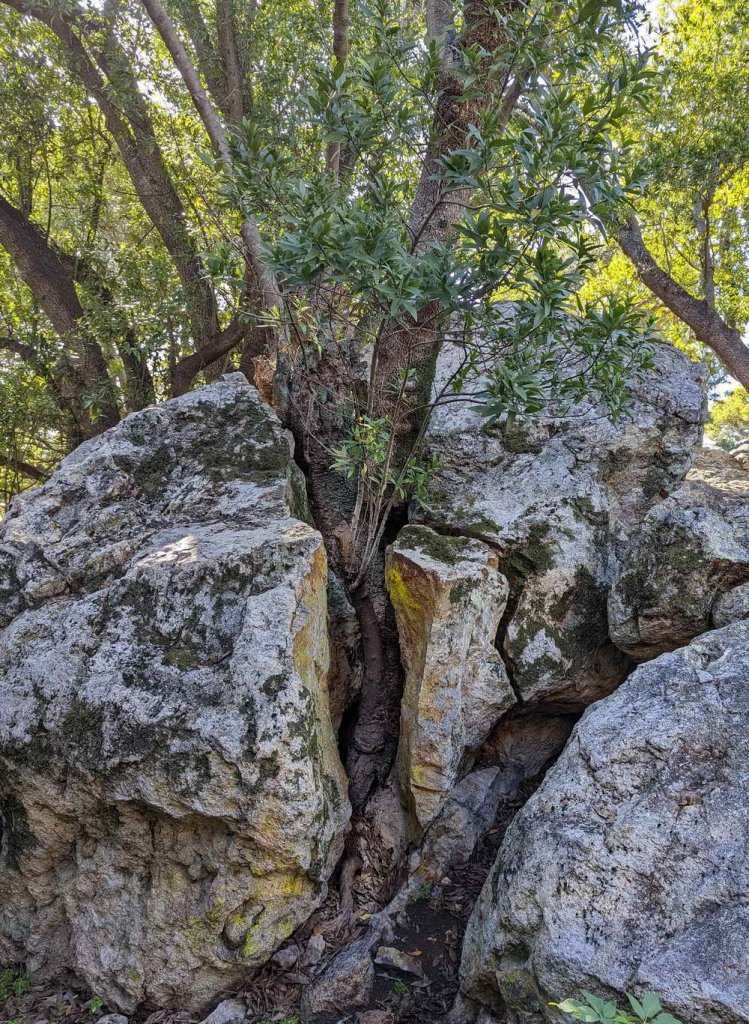
Mortar Rock: Reviving and honoring beauty and history: Some of North Berkeley’s ancient and picturesque volcanic outcrops, shifted by movement along earthquake faults, were set aside by developers even before the city annexed the area.
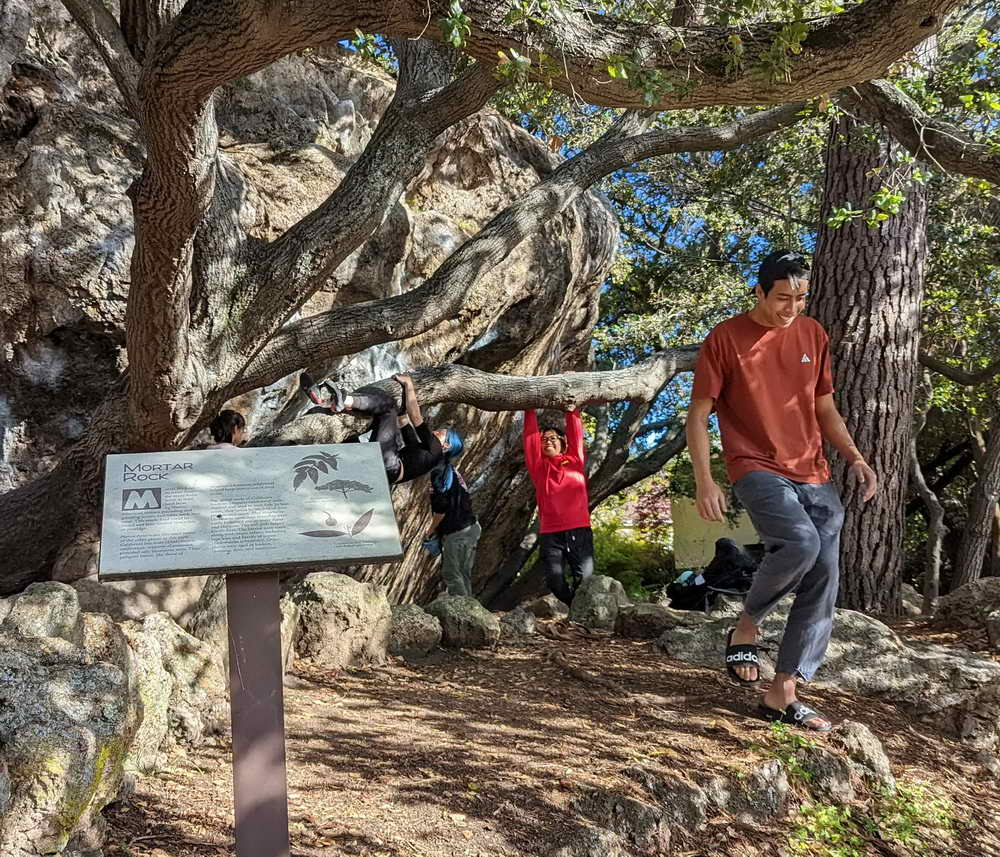
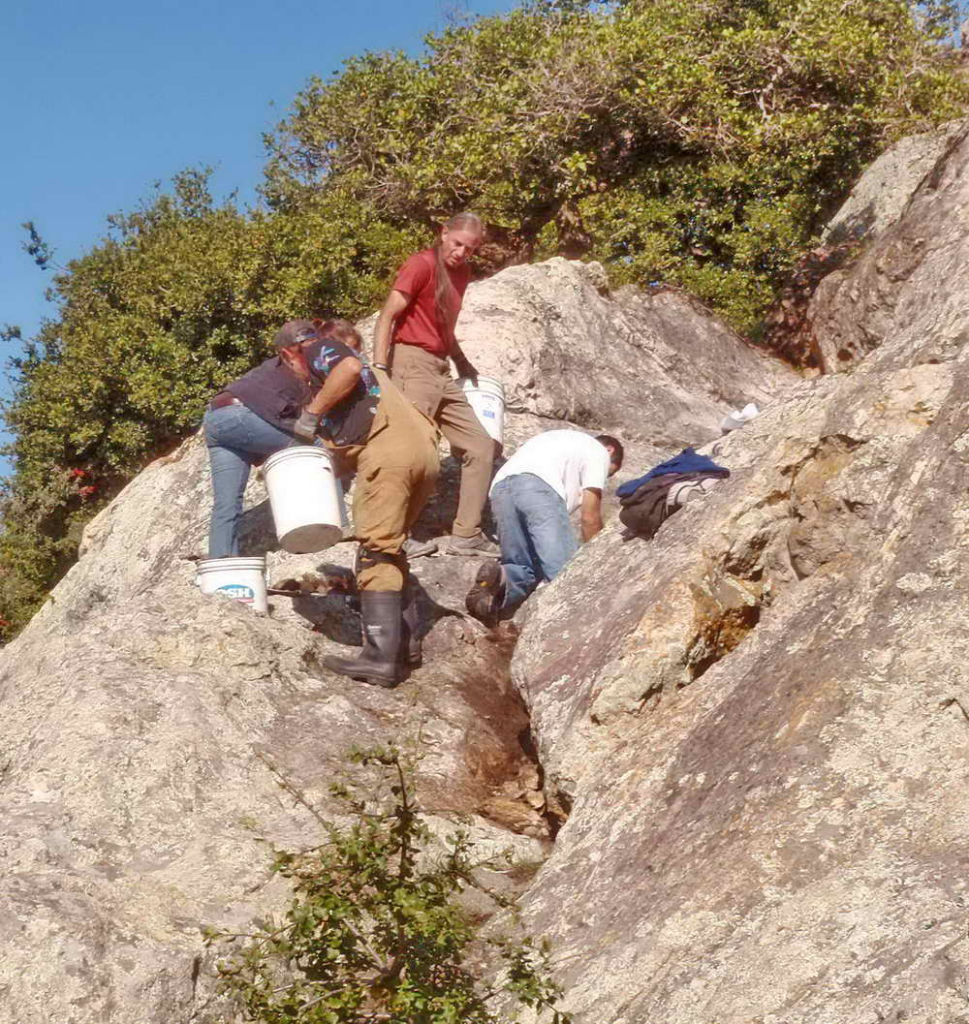
Less well known than nearby Indian Rock, Berkeley’s Mortar Rock Park is named for the many hollows worn by Native American women pounding acorns and other seeds. The small park, with magnificent bay and buckeye trees, by the early 2000s was neglected and little used, overrun by ivy that hid broken glass and smelly dog poop. Beginning in 2007, with encouragement from parks gardener Pam Boland, Friends of Five Creeks volunteers rolled up and hacked out the choking ivy, planted natives, and installed an interpretive sign.
IIntensive work parties continued for about five years, many with UC Berkeley student service groups. Varied natives we planted grew in — mugwort, wild strawberries, Douglas iris, native California roses, snowberries, soap root, and more. Parks gardener Pam Boland, who encouraged the project, introduced red-flowered, fragrant-lleaved hummingbird sage. It spread vigorously. Maintenance needs decreased steadily as the varied understory plantings grew in and relentless weeding suppressed burr clover, ivy, erharta grass, evergreen thornless blackberry, and others. Some plantings failed due to drought, shallow soil over rock, heavy use by climbers, or the dense layer of needles shed by pines. Thick covers of mosses and polypody ferns on rocks and old bay trees were lost to increasing drought and, sadly, theft. But overall, Mortar Rock is model of how something resembling native biodiversity can be restored.
Grotto Rock: Restoring access to magnificence and romance: Nearby Grotto Rock Park, with magnificent sunset views, has been called the most romantic spot in Berkeley. Named for a trickling spring long since concreted for safety, like Mortar Rock it can be explored on paths and steps cut long ago. By 2010, when F5C volunteers began working there, trails were decrepit, the rock was heavily infested with acacias and thorny blackberry, and weeds crowded the planting beds.
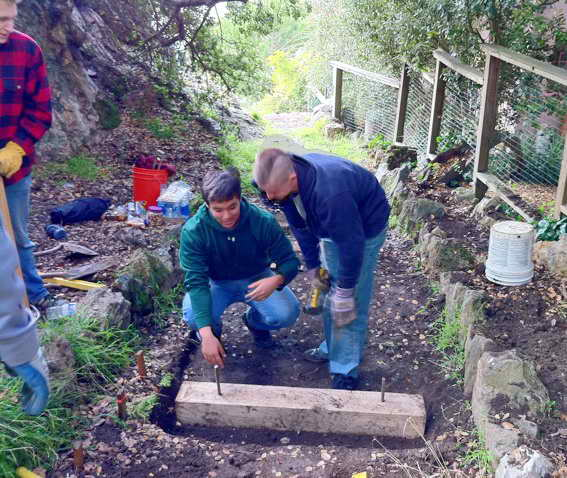
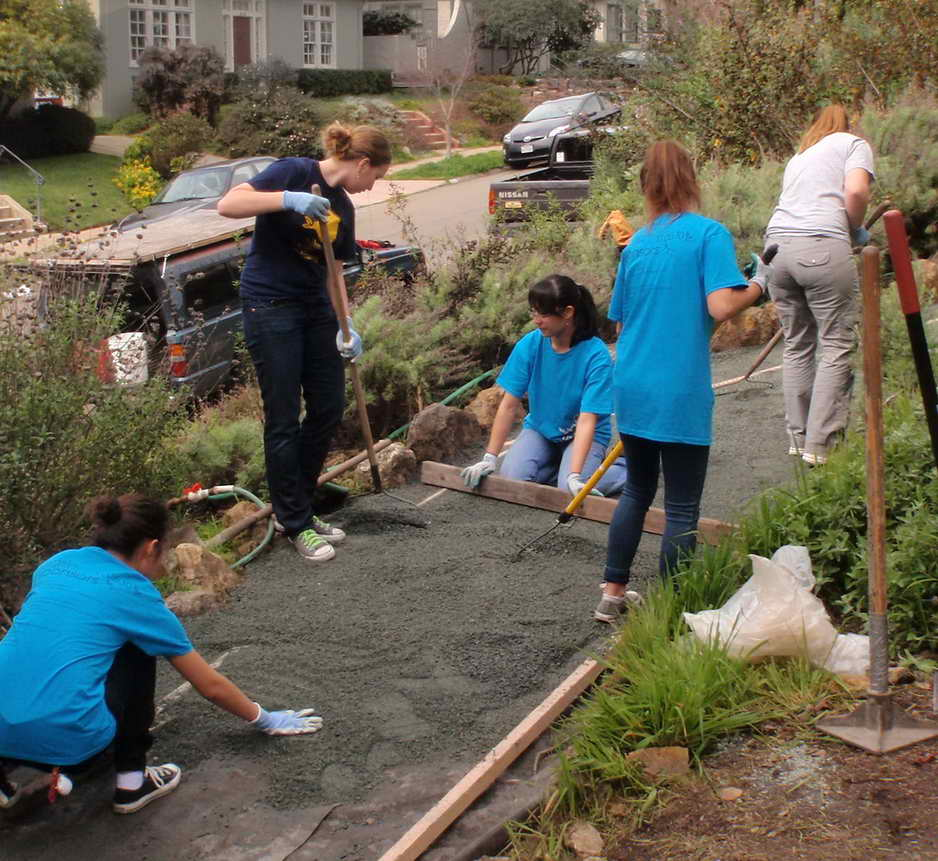
Eagle Scout candidates built safe new trails and steps. Volunteers from UC Berkeley’s then-new Berkeley Project moved 10 tons of decomposed granite in one day to repair and improve the path! The improved access remans. In Grotto Rock Park, though, almost none of the natives we planted remain — though most were the same tough and proven species planted at Mortar Rock. Different combinations of soil, shade, moisture, and stewardship? Some future group may have more success.
Click above left to read a short history of Berkeley’s rock parks. Below, enjoy our two-minute slide show on Mortar Rock Park.